
Shift at Midnight beginner’s guide: how to survive your first week
Cashier, cleaner and detective, all on one clock. How to stop doing all three badly in your first week of Shift at Midnight.

- Updated
- Published
- Read
- 5 min read

Quick answer
Serve the customer at the counter first, read the computer before every shift, and run the same short database check on everyone who walks in. Don’t bag anything until you’ve made up your mind.
Most early deaths in Shift at Midnight come from running three jobs at once and giving none of them enough attention, because no single system in the game is that hard. The fix is order and habit. (A game full of monsters, and the survival advice is mostly queue discipline. I didn’t design it.)
Three jobs, one clock
You’re the cashier, the cleaner and the detective, every night, all at once. None of them is complicated on its own (scanning an ID is easy, mopping is easy), but trying to do all three at the same time instead of working out which one matters right now is what buries new players. The shortcut that works is simple: a customer at the counter comes first, always, and an empty counter is your window for shelves, cleaning and orders.
Treat it like a queue instead of a plate-spinning act and the shift calms down fast. Skip that and you’ll either mop while three people wait unserved or bag groceries while the store quietly turns into a health violation. They fail differently, but they both fail.
Check the computer before customers walk in
A Blood Moon warning means confirmed entity activity is waiting at the end of the shift, plus a spike in doppelganger customers along the way. Prep has to start before the countdown shows up, so read the warning the moment it appears. Other warnings flag new creature types or one-off dangers specific to that night, which makes them worth the five seconds, because every shift does not play like the last one.
Skip the notification and you walk into a night you didn’t know was different. If you’re playing with a group, check it together up front so roles get handed out calmly instead of everyone scrambling once a hunt has already started. Panic is a poor way to assign jobs.
Read the screen, not the face
Someone acting twitchy or off means nothing by itself, since plenty of humans in this game are just strange. The database is the one thing in the store that isn’t trying to trick you, so it gets the final say over your gut. (The one customer who breaks the usual rules on purpose is Norbert the gnome, and he’s a whole other headache.)
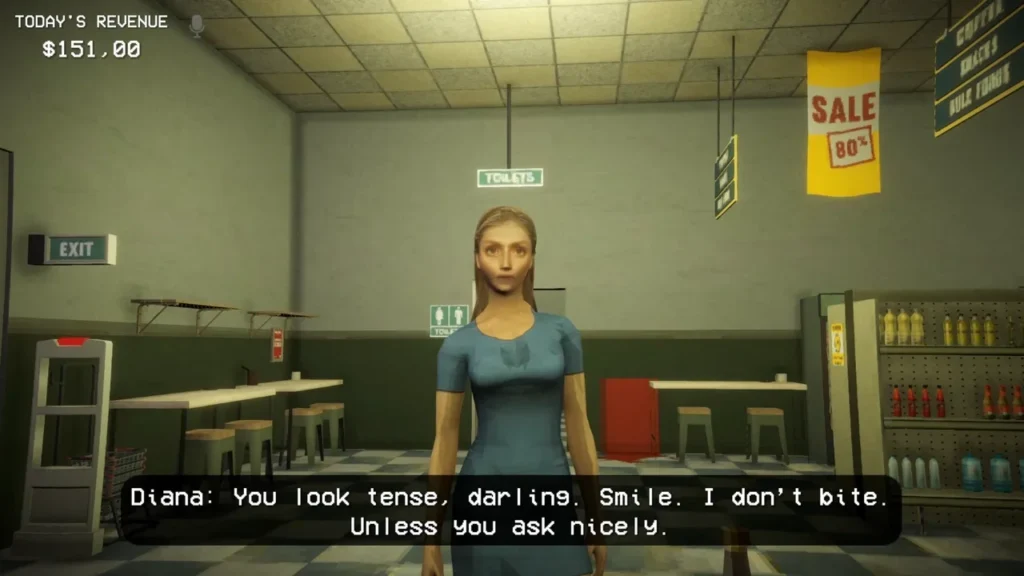
The quick sequence
- Check the ID. Scan it or type the name in manually, and see whether they’re even listed as alive.
- Match the details. Line up their listed occupation, physical description and noted habits (always grabs one item, always dressed a certain way) against who’s standing in front of you.
- Check the plate. Once the gas pump unlocks, add the license plate to the routine and confirm it matches the registered owner.
The alive check alone catches a good chunk of obvious fakes before you’ve spent any time on follow-ups. You don’t need a full interrogation on every customer. Run the same fast sequence each time and push further only when something doesn’t line up, because one question aimed at the actual inconsistency protects you better than five throwaway ones.
Never bag until you’re sure
Hold the bag. The moment the sale completes, your window to stop a doppelganger before it walks out the door is gone, and it comes back later considerably less friendly. Keep the bag empty and the investigation open until you’re satisfied, then close it out.
The caution runs the other way too. Shooting an actual human costs you money, so treating every odd customer as guilty by default is just a slower way to lose. If two details disagree, check a third before you pull the trigger. With friends, get a second opinion, and solo you eat the extra couple of seconds. A slow sale costs less than a wrong one.
When you get it wrong
Miss one and the shift doesn’t end quietly. A warning and a countdown show up, and something is coming that has zero interest in your store rating.
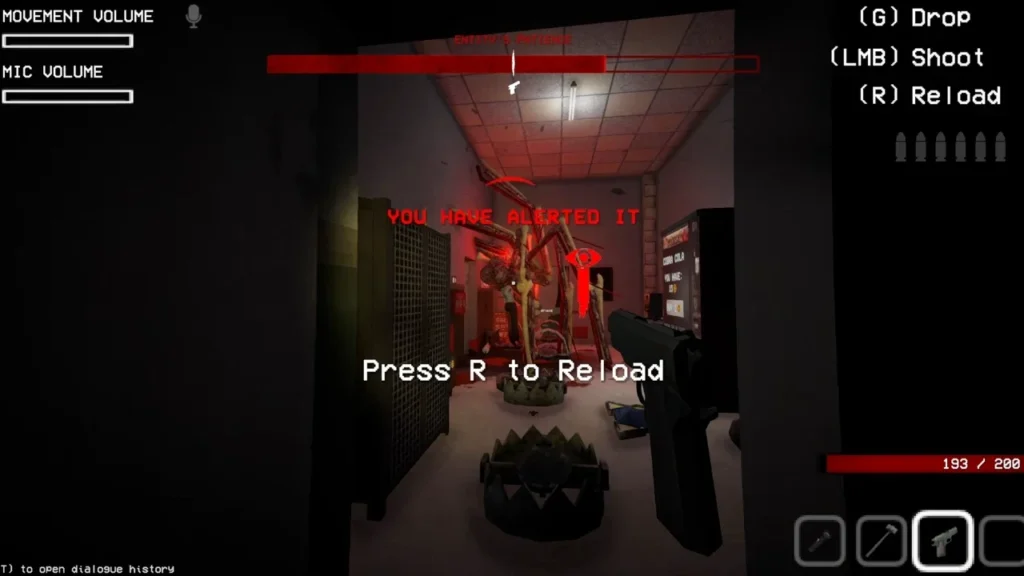
Board all three doors
The store has three ways in: the front entrance, the toilet and the rear office door. Boarding only the front is how people find out the hard way that the other two existed the whole time. Spread the boards across all three if the clock allows it, starting near wherever you actually plan to hide.
Spread traps, don’t stack them
Piling every trap next to your hiding spot hangs a sign over your head the second one triggers. Spread them across the entrances and the aisles connecting front to back, so whatever is hunting you has to work for it instead of walking a clear line straight over.
It can’t see you, so move like it
Crawl toward a vent or the loading area instead of sprinting across open floor with no plan, and don’t pop out somewhere that puts you directly in its path. Outlasting its patience is the goal, so skip the fight. Once it does leave, don’t relax right away, because smaller stragglers can still be lurking and need handling before the shift is actually done.
Clear your traps. Dismantle any unused traps before your next normal shift starts. Leave them out and they’ll happily maim a paying customer instead of a monster.
Solo is triage, co-op is traffic
Playing solo
You physically can’t run the counter, restock and clean at the same time, so stop trying. Counter and pump come first whenever customers exist, and everything else waits for the gaps between them. Treat the night as two passes instead of one constant scramble: early on it’s about revenue and reading customers, later it’s about catching up on whatever piled up.
If a hunt is coming, start boarding and trapping early enough that you’re not cleaning, stocking and barricading in the same sixty seconds.
Playing co-op
With a group the usual problem is two people doing the exact same job while the rest of the store falls apart. Split it properly: one person owns the counter and the database, someone else owns shelves and cleaning, and a third floats to whatever is falling behind.
When something looks off, say what’s actually wrong. “The listed job doesn’t match what they’re doing” helps, and “that guy’s sus” helps nobody. Keep it to one person touching the database at a time too, since three people shouting different spellings creates more confusion than the doppelganger would.
The moment a hunt starts, drop the store roles entirely. Someone boards, someone traps, and someone tracks the timer and the threat’s position. Stocking shelves mid-hunt is how a survivable encounter turns into a wipe.
Up next in Shift at Midnight
Did this guide help?
Something wrong or out of date? Tell us

Guide by
Josh
Josh plays a lot of Arc Raiders and yells “friendly!” into proximity chat more than he should. He gets shot anyway. He’s also a horror fan who has quit more games at the first jump scare than he’ll admit, and he runs a Supermarket Simulator shop he’s weirdly proud of.
Popular right now
-
GuidesEarly game
-
GuidesEarly game
-
GuidesMidgame
-
GuidesMidgame




Squad chat
Be the firstStart the chat