
Planet Zoo 2 accreditation: what each tier needs and how to reach Tier 5
How Planet Zoo 2 accreditation works in Franchise and Career, what every tier needs and unlocks, and the order to build zoos and reserves in.

Quick answer
Accreditation is the ladder that unlocks more animals, marketing slots and research gear. In Franchise you climb it with zoos and Wildlife Reserves at 3 stars for Tiers 2 and 3, then 4 stars for Tier 4 and 5 stars for Tier 5. In Career you climb it with medals instead, and the two never share progress.
Everything here is as of 20 October 2026, after Update 1.0.5. Frontier said on 14 October that it’s looking at the star requirements, so check your Accreditation tab before you plan around a number.
Accreditation is the reason your animal market looks so thin at the start. A new Franchise begins with 32 of the 136 species, and the other 104 are spread across the four tiers above it. It’s a long climb, and honestly a bit of a “just one more reserve” situation, but each step only checks a couple of things. Once you know which, the order more or less plans itself.
What accreditation unlocks
Every tier opens up more species in Animal Trading and more marketing slots, and some add a bit of research gear or extra animal storage. Franchise adds 33, 31, 30 and then 10 species on top of the starting 32. Career starts you on 33, adds 38, 35 and 30, and gives nothing new at Tier 5. Both end up at the full 136.
Franchise and Career each keep their own accreditation, which trips people up. Medals won’t move your Franchise tier and zoo stars won’t move your Career one, so you don’t need to park one mode while you do the other. (Sandbox doesn’t have accreditation at all.)
Franchise tiers at a glance
| Tier | What you need | New species | Also unlocks |
|---|---|---|---|
| 1 | Nothing, it’s where you start | 32 | 1 Bronze marketing slot |
| 2 | 1 zoo at 3 stars | 33 | Camera Trap, 2 Bronze slots |
| 3 | 2 zoos at 3 stars and 1 reserve at 3 stars | 31 | Acoustic Monitor, 1 Bronze and 1 Silver slot, Silver campaigns |
| 4 | 2 zoos at 4 stars and 2 reserves at 4 stars | 30 | 1 Bronze and 1 Silver slot, 50 more animal storage |
| 5 | 2 zoos at 5 stars and 3 reserves at 5 stars | 10 | 1 Silver and 1 Gold slot, Gold campaigns |
A zoo’s stars come from its Reputation and a reserve’s stars come from its Biodiversity Rating, so a brilliant zoo can’t cover for a missing reserve. Lots of guides will tell you 3 stars is enough for every tier. It isn’t, because Tier 4 asks for 4 and Tier 5 asks for 5, and that last jump is where most of the work is.
What the extras are worth
- Marketing slots add up to nine campaigns by Tier 5, which is five Bronze, three Silver and one Gold. Silver campaigns open at Tier 3 and Gold at Tier 5, so the Show-Pony achievement (starting a Gold campaign) needs the top tier too.
- Research gear starts with Observation Platforms, which you have from the beginning. Camera Traps turn up at Tier 2 and Acoustic Monitors at Tier 3. They only matter in reserves, so I’ll come back to them.
- Animal storage goes up by 50 slots at Tier 4, which is handy once your breeding has got ahead of your habitats. (Animals in storage don’t age, as it happens.)
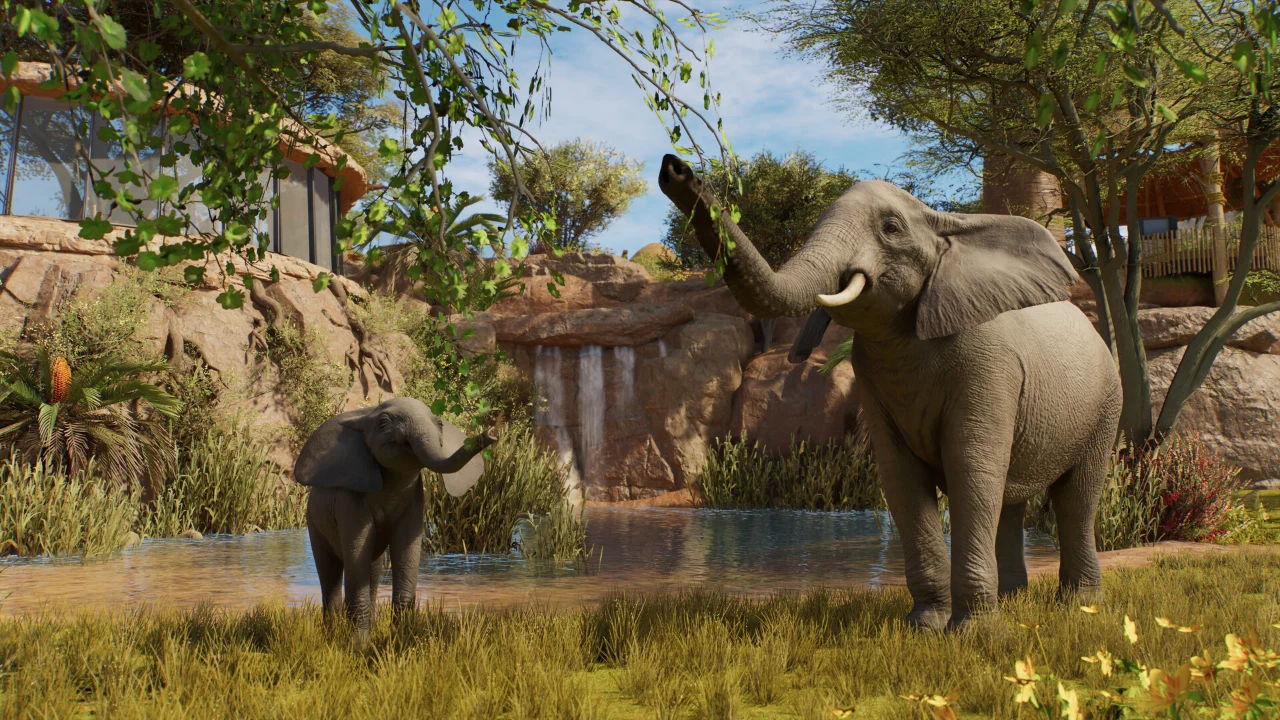
- The big names arrive at Tier 5: lions, both elephants, giant pandas, chimpanzees, gorillas, orangutans, great hammerheads, ocean sunfish and white-backed vultures.
How to raise Zoo Reputation
A zoo’s stars are built from four ratings: Animal Husbandry, Sustainability, Guest Education and Guest Experience. Open Zoo Management and then Overview to see all four side by side, then fix the weakest one first, since that’s where the cheapest stars are.
Animal Husbandry counts for the most. It’s the average welfare of your animals plus how many of them are Thriving (a status each species unlocks through research, one requirement at a time). A few species only open their later research levels once one has been released into a reserve, so that’s a good excuse to build the reserves you’ll need anyway.
Sustainability is the easy one. It’s basically how much of your zoo runs on renewable energy and recycling bins, so it climbs quickly once you’ve got some cash to swap generators and put bins out.
Guest Education is how much your guests have learnt on average. That’s why I’d put an education board at every habitat from day one, cover a few topics per animal, add educators for talks and research new topics as they unlock. It lifts donations too, and the money guide has the details.
Guest Experience is the messy one. It mixes guest happiness (energy, hunger, thirst and toilets), how nice the zoo looks and how many species you keep, so great animals with too few toilets and nowhere to sit still get marked down.
The last star is the stubborn one. One player on Steam said all of their ratings sat at 100% and the zoo was still stuck on four stars, which is not what you want to read when Tier 5 needs two five-star zoos. I only found the one report, so I can’t tell you what’s behind it.
How to raise Biodiversity in a reserve
Reserves have their own score. Biodiversity Rating is the reserve version of Reputation, tops out at 5 stars and is built from an Ecosystem Rating and a Research Rating. Pollution and invasive species drag it down, so clear those before you release anything.
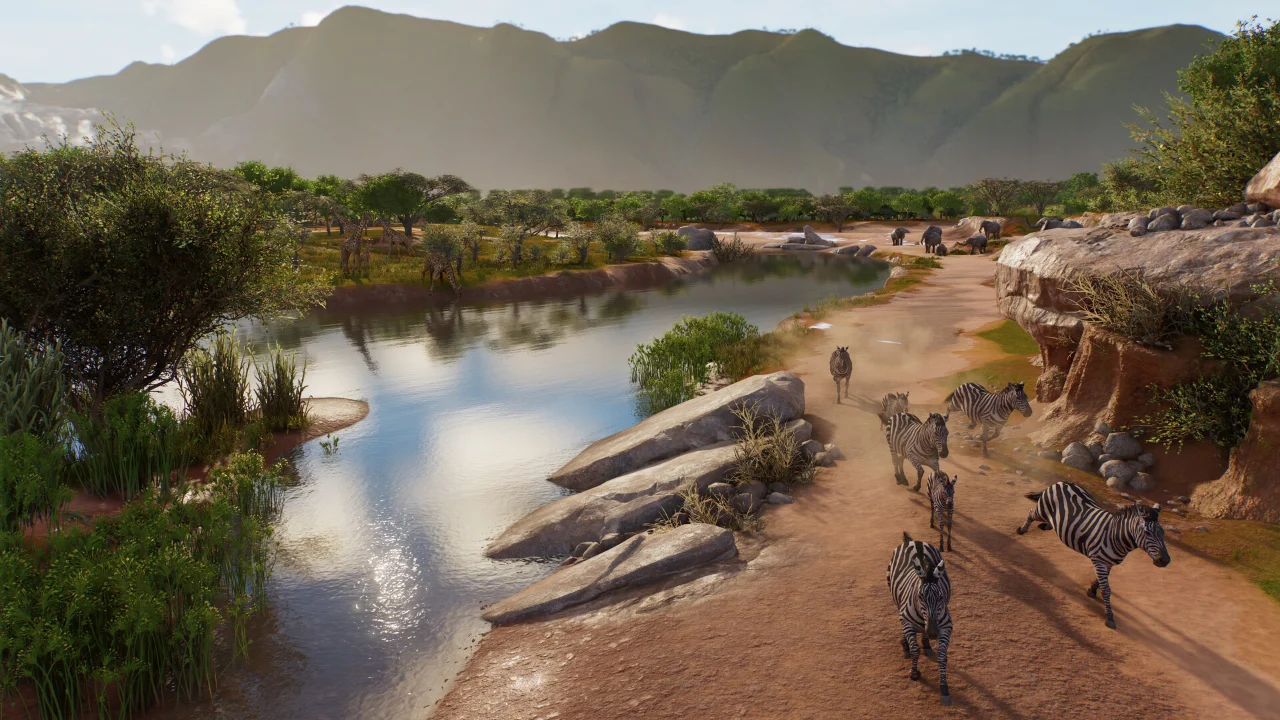
The Ecosystem Rating is about the habitats you paint. Each ecosystem (Savannah, Watering Hole, Mixed Lowland Forest and so on) has to become Established first, meaning it has the terrain, nature objects and water it asks for. It turns Flourishing once the animals you release fill all of its roles. Grazers and browsers are the easy part, and predators only fit once there’s enough prey for them, so build up from the bottom.
Release groups need their species researched first, so the order is to adopt the animals in a zoo, research them and breed some young to send over. Opening a second zoo or a new reserve costs Conservation Credits as well, so don’t spend them all on animals. The breeding guide covers the species that give you spare animals quickest.
The Research Rating comes from a Research Network, which means Observation Platforms, Camera Traps and Acoustic Monitors spread across the reserve. The wider the area they cover the better, and you don’t need all three before you start, since platforms alone get the rating moving. Species also need the network, plus a release into that reserve, before their later research levels open.
The order I’d build it in
- Take your first zoo to 3 stars. That’s Tier 2.
- Open a second zoo (it costs Conservation Credits) and take it to 3 stars too.
- Open a reserve, clear it, paint your ecosystems, release a first few species and put up some platforms. 3 stars there gives you Tier 3.
- Raise both zoos to 4 stars, bring the first reserve to 4 and open a second one and raise that to 4 as well. That’s Tier 4.
- Open a third reserve and take both zoos and all three reserves to 5 stars. That’s Tier 5, and it earns Credit Where It’s Due, the achievement for the top tier.
Two things save time. A single 5-star zoo doesn’t count as two, so grow both zoos in step instead of polishing one. And any three reserves count, so pick the ones whose animals you already own and have researched.
Career is different
Career raises accreditation with medals from the scenarios instead. Each of the first three tiers also opens a new scenario, and Tier 5 gives Gold marketing campaigns but no new animals.
| Tier | Medals needed | What it opens |
|---|---|---|
| 2 | 2 Bronze and 1 Silver | Nordic Fjords |
| 3 | 7 Bronze and 1 Silver | Sumatra Reserve |
| 4 | 12 Bronze and 2 Silver | Maluku Islands |
| 5 | 18 Bronze and 2 Silver | Gold marketing campaigns |
Reaching the top tier in Career counts for Credit Where It’s Due as well, since the achievement takes the highest tier in any mode except Sandbox. The achievements guide has the rest of the list.
If your tier won’t go up
- Open the Accreditation tab and read the next tier’s requirements line by line. It’s usually one missing zoo or reserve rather than a rating that’s too low.
- Two good zoos aren’t enough for Tier 3. It also needs a reserve at 3 stars, and reserve stars come from Biodiversity, not Reputation.
- One 5-star zoo doesn’t stand in for two, so a second zoo has to catch up.
- Career medals and Franchise stars don’t carry over, so progress in one won’t show up in the other.
Once the zoo side is humming, the starter animals guide covers what to adopt first. (Everything each species needs is in the habitat requirements table, and the money guide covers the cash and credits to keep it all running.)
Something wrong or out of date? Tell us
Guide by
Sunny
Sunny’s favourite game is Stardew Valley, and she has told herself “one more day” about four thousand times. The rest of her time goes on dying in a basement in The Binding of Isaac and planning her whole week around who she’s hanging out with in Persona.
Up next in Planet Zoo 2
Keep playing
-
GuidesMidgame
-
GuidesMidgame
-
GuidesMidgame
-
GuidesEarly game


Squad chat
Be the first