
Planet Zoo 2 review: a beautiful zoo with a rough start
Aquariums, aviaries and Wildlife Reserves make this Frontier’s best-looking zoo yet, but a lopsided roster, a slow Franchise climb and a rocky launch hold the score back.
Quick answer
Planet Zoo 2 is the best-looking and best-building zoo game Frontier has made. Aquariums, aviaries and Wildlife Reserves each add something real, and the animals are a treat to watch. A lopsided roster, a Franchise ladder that rations your animals and a launch full of crashes keep it from being the easy recommendation it should be.
Every zoo game comes down to one small moment. You finish a habitat, press play and see whether the animals settle in or stand in a corner looking baffled. Planet Zoo 2 gets that moment right more often than the first game did, and it takes a good chunk of the old frustration out of the building that leads up to it.
It also asks a lot of you. Habitats come with a long list of demands, Franchise mode hands over a slice of the animal list and makes you earn the rest, and the first weeks after launch were bumpy. None of that cancels out how lovely the game is to sit in for an evening, so most of what follows is about where the lovely stops.
| Detail | Planet Zoo 2 |
|---|---|
| Developer and publisher | Frontier Developments |
| Released | 13 October 2026 |
| Platforms | PC (Steam and Epic), PlayStation 5, Xbox Series X|S |
| Price | $49.99, £39.99 or €49.99 (Deluxe is $64.99, £54.99 or €64.99) |
| Modes | Career, Franchise and Sandbox |
| Species | 130 in the base game, 136 with Deluxe |
Building habitats and zoos
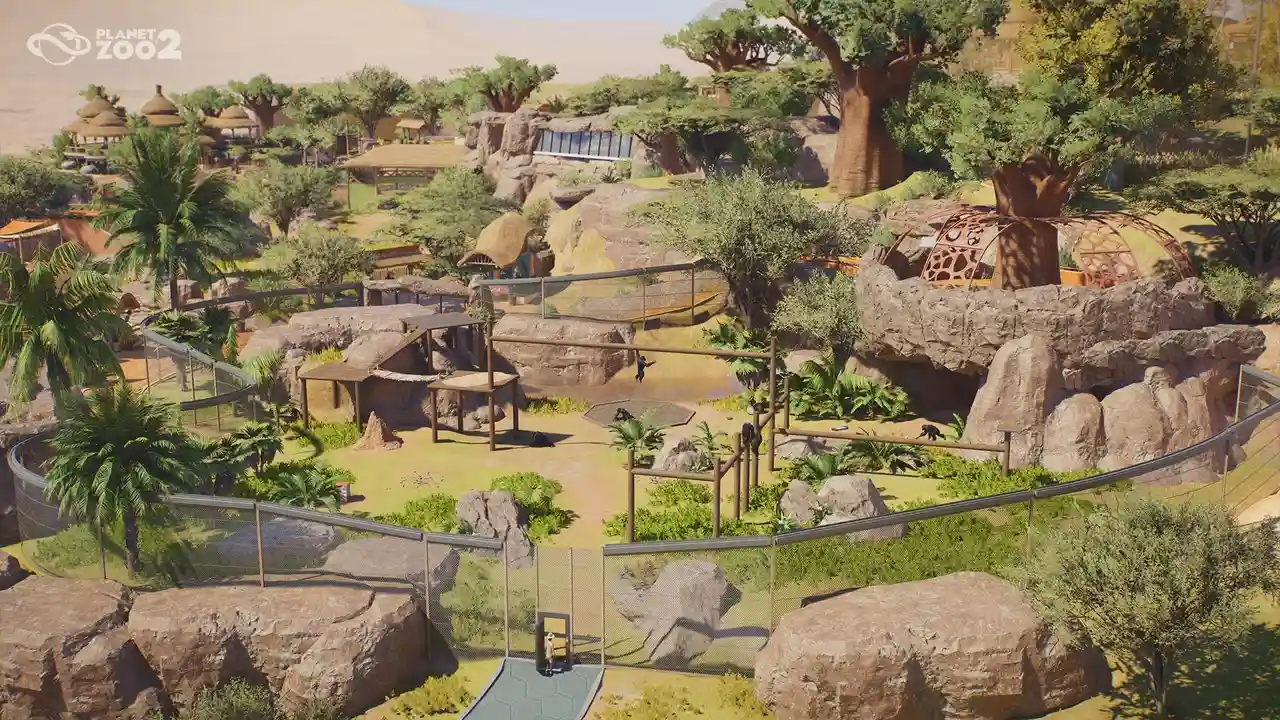
Fighting the terrain was the first game’s favourite pastime, and Planet Zoo 2 has mostly put a stop to it. Nature brushes let you paint a whole biome’s worth of plants and rocks in one stroke, you can reshape ground that already has water on it without draining anything, and objects scale and mirror the way you’d hope. Paths behave better too, especially around plazas and tunnels. After years of nudging single ferns into place, painting a forest floor in a few passes feels slightly like cheating.
Habitats are where the game keeps its teeth. A habitat is one closed loop of barrier with one Staff Gate, and every species wants its own mix of space, terrain, plants, temperature and company. Barriers come in 16 types on a scale of 1 to 6, and the top of the scale isn’t automatically climb-proof, since Steel Mesh and Gabion can both be scaled. Null barriers are invisible and stop nothing at all, which the game explains once and everyone forgets within the hour.
Two tools make all of that bearable, and I’d point any newcomer at both. Pin Species lets you list the animals you have in mind and shows their combined needs before a single wall exists, and the Traversable Area heatmap maps out every route an animal could take to reach a barrier. They are exactly the help a game this demanding should give you.
What’s left is the sheer number of things to check. Temperature, terrain, plants, water, group size, sex ratio, enrichment, shelter, plus a whole submenu on whether an animal counts as Thriving. Quick buttons jump you to the right menu and premade habitats cover the basics, but you still end up in panels for long stretches. I’d love the requirements list to tell me what to fix first, in an order that helps, instead of laying everything out at once.
Aquariums
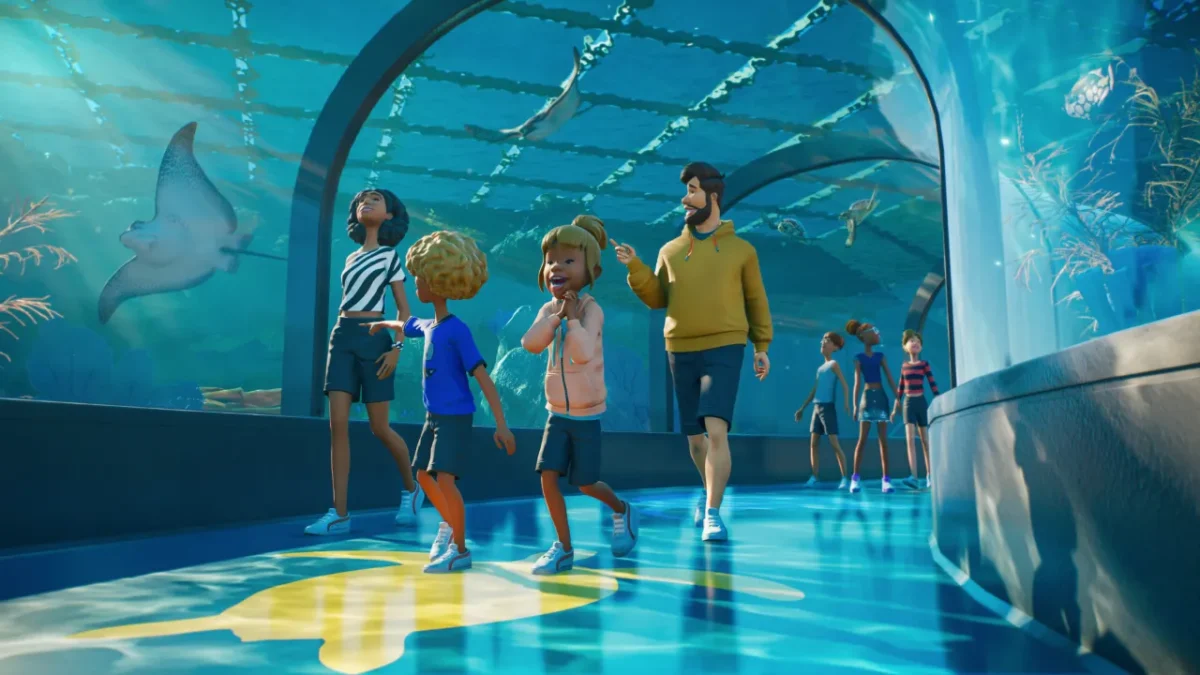
Aquariums are the first new thing most people will build, and they’re a joy once the water is running. You draw a closed loop of aquarium barrier, add an Aquarium Staff Gate, which is what makes the tank fill, then connect a Water Filter that has power and choose fresh, brackish or salt water. The water type is set for the whole filtration network, while temperature is set tank by tank. The 37 species are a mix of 35 fish, one turtle (the hawksbill) and the manatee. Most of the fish live as shoals, which the game tracks as one group instead of a few hundred separate animals, while sharks, turtles and the other large animals are tracked individually.
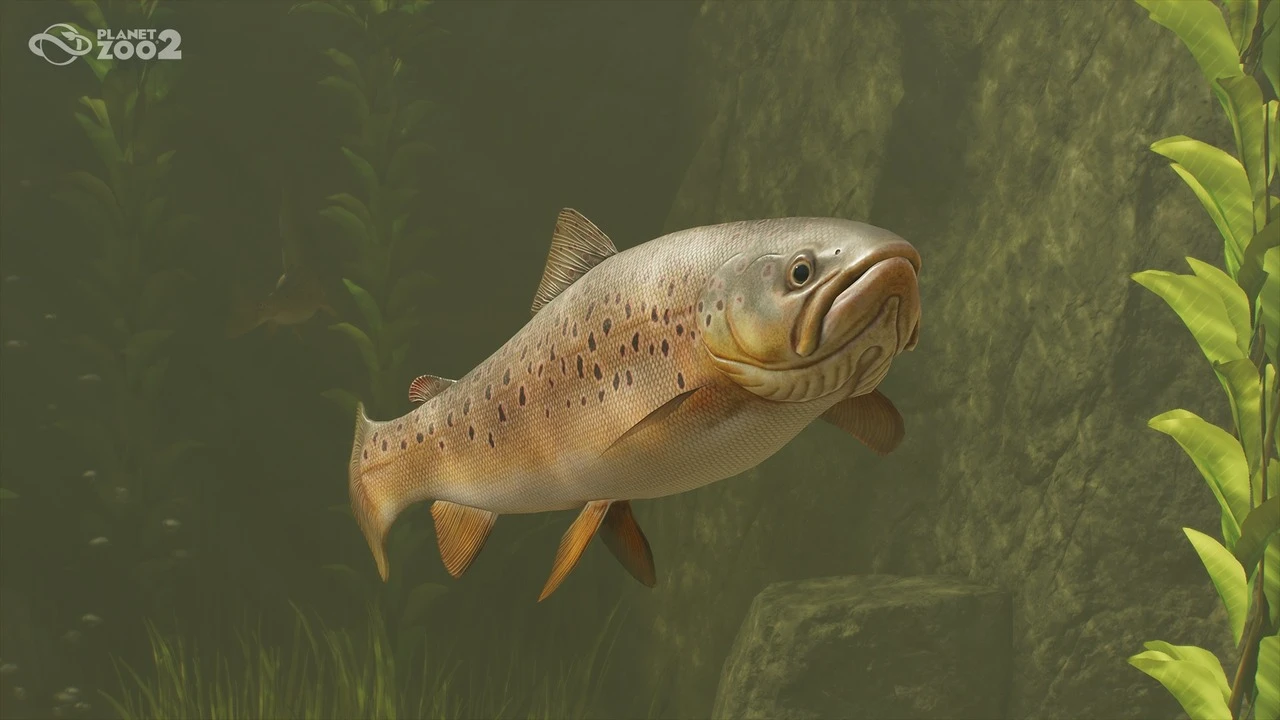
The view is the reward. Guest gates let you run a walkway straight through a tank, at more than one height if you like, and keepers pull on diving suits to scrub the glass and feed the fish. Big sharks like long straight runs along the walls, so they’d rather have a few generous panes than lots of little bends. The ocean sunfish cruises the glass and studies your guests while they study it, which is as sweet as it sounds.
The game is much quieter about what has gone wrong when a tank misbehaves. The filter has to link to a connection node on the Staff Gate, and the glass has no node, so poking at the walls achieves nothing. Plenty of tanks sit brim full with a No Connected Water Filter warning hanging over them, and this is why. Water Cleanliness is the filter’s job and Tank Cleanliness is up to your keepers, so a grubby tank with clean water is a staffing problem that no filter will fix.
Pro tip: Choose the water type before any fish arrive. Every new tank starts with fresh water, which saltwater species can’t cope with.
Changing a tank later is the other sore spot. One with water or animals inside is locked against reshaping, so every edit means boxing the animals, draining the water, making the change and filling it again. I’d go bigger than seems sensible the first time, because the largest sharks want hundreds of square metres of deep water and those tanks are projects of their own.
Aviaries
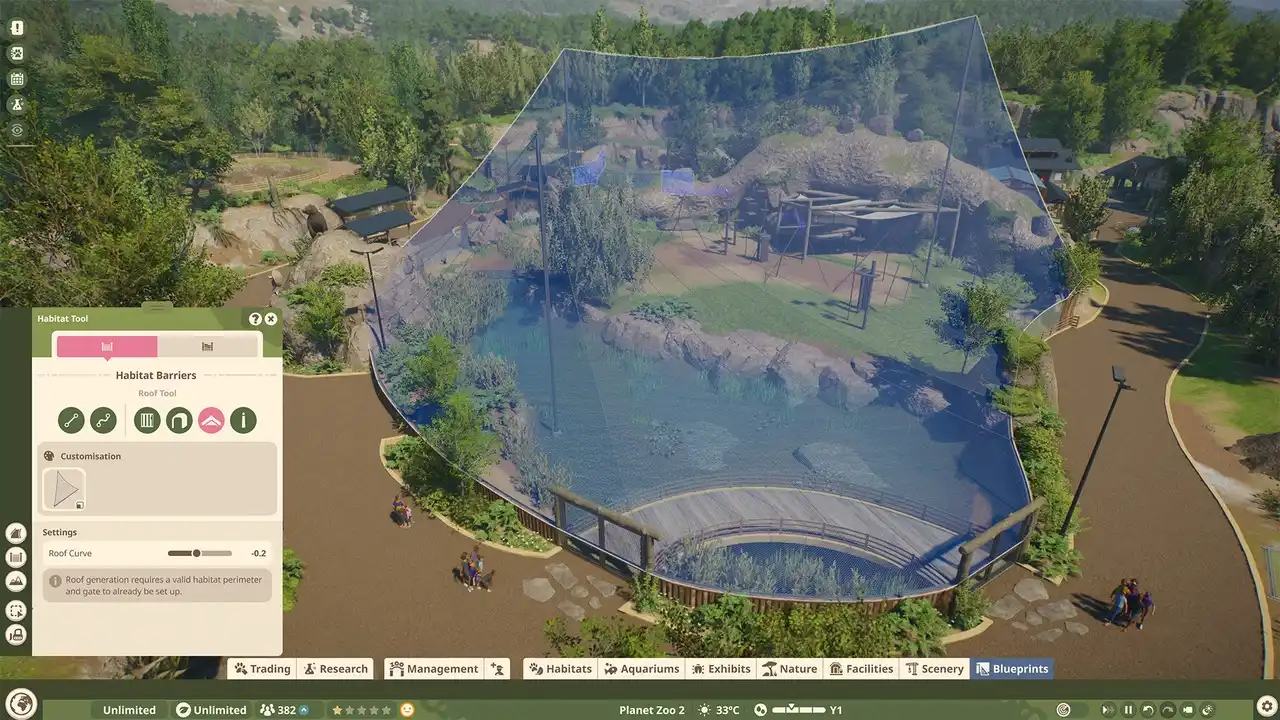
Aviaries are quicker to build. Draw the habitat, pick the Roof Tool, click the finished habitat and a mesh roof appears over it. Add roof supports to raise it, since birds need height to have any room to fly, then restyle the roof until it looks right. Any habitat can take a roof, so ground animals and birds can share a space, and the game warns you when two species won’t get along.
The birds look wonderful and the toucans are the ones I’d build around. They change less about how you play than the aquariums do, though, since most of it comes down to a big net and plenty of height. I’d have liked a few more species to play with, because flying birds were the headline of the announcement and the list feels short for that.
Wildlife Reserves
Wildlife Reserves change what the whole game is about. There are six, spread over three continents. Africa gets Tanzania and the Great Rift Valley, Asia gets Sumatra, and Europe gets Poland, Sweden and the Scottish Highlands. Each one starts out as damaged land. You clear the pollution and the invasive plants, paint ecosystems with the Ecosystem Brush, put up a Research Outpost with a monitoring network of camera traps, acoustic monitors and observation platforms, and then you release animals from your zoo into it.
A freshly painted ecosystem starts out Invalid, turns Established when its terrain, plants and water are right, and Flourishes once the animals you’ve released cover every role in it. Predators only fit when there’s enough prey, so you build up from the grazers. The reserve’s Biodiversity Rating draws on those ecosystems and on your research network, and the ceiling is five stars.
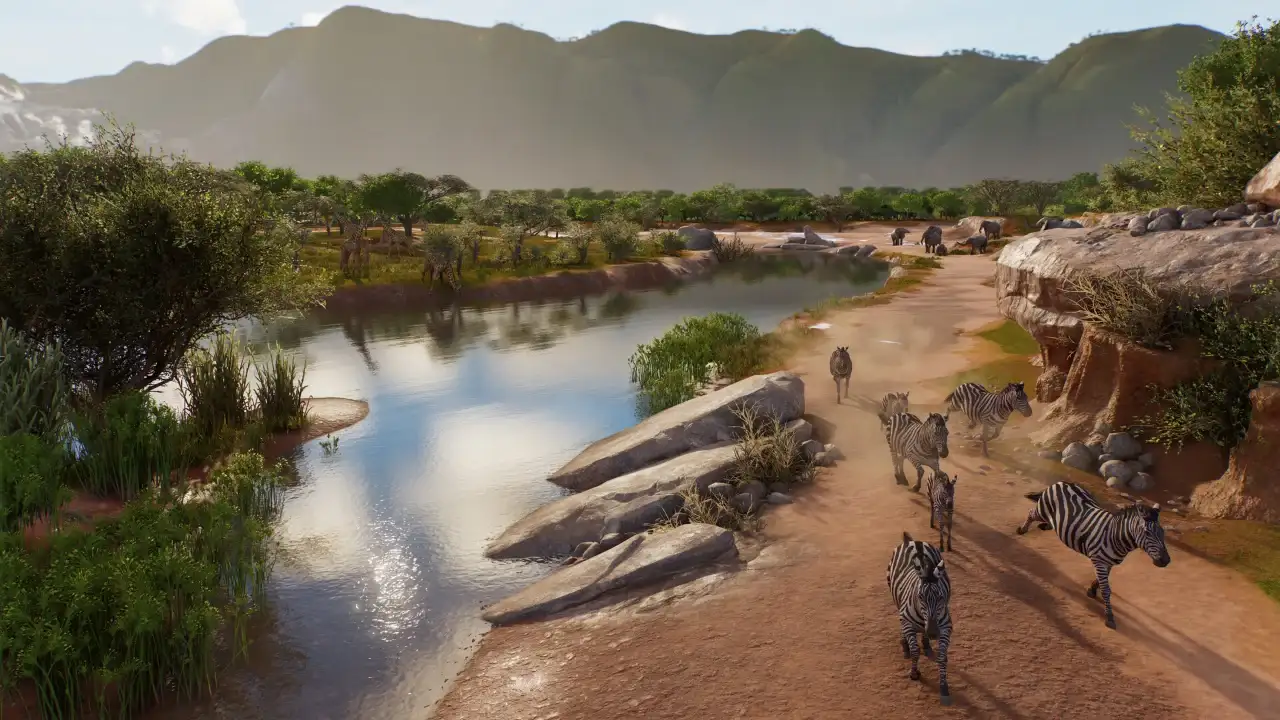
The release itself is the satisfying part. You pick a species, build a release group (zebras, for instance, go out as a group of four with one male and no relatives among them) and send it off from the Planet Hub. Afterwards you can walk the land or hop in a Research Vehicle and snap photos that turn into Conservation Credits and research progress. Credits buy more animals, which you raise and release, which pays for more animals again. It gives a long game a clear direction and makes every animal you raise feel like it’s heading somewhere.
Watch out: A finalised release group is permanent. After a group enters acclimatisation its animals are gone from your zoo for good, so leave a breeding pair behind and make a manual save before you head to the reserve.
My complaint is the shuttle. Some species keep their deeper research levels locked until one animal has gone out to a reserve, so a lot of play turns into hopping between zoos to box animals up and then hopping to the reserve to watch them run off. It can feel more like running a delivery service than conserving anything. That trip is also where animals have gone missing, and one of the later updates added a fix that replaces animals lost to a crash during a release, which tells you how often it happened.
The map is the other problem. Three reserves in Europe, two in Africa and one in Asia leaves the Americas and Oceania with nothing, and the Planet Hub looks half finished because of it.
Career, Franchise and Sandbox
Career puts you in the boots of a conservation coordinator for the Fauna and Ecosystems Network, sent around the world to rescue struggling zoos and restore reserves. The early scenarios are gentle and double as tutorials, and later ones step back and leave you to it. Medals raise your accreditation, and the first three tiers each unlock a new scenario, so there’s always somewhere new to go. The reserves arrive in order too, starting with Great Rift Valley and opening the rest over the next three chapters. The goals are the kind you’d expect from a management game. Career is a good teacher and a decent campaign.
Franchise is the online mode, with several zoos and reserves sharing one save. Animals come from a live market full of other players, which means a Frontier account and a working connection are compulsory. You begin with a small slice of the roster and the rest unlocks through accreditation tiers. Zoos earn star ratings from Reputation, reserves earn them from Biodiversity, and the top tier wants one five-star zoo and two five-star reserves.
I like the idea more than the way it plays out. Rationing the big animals makes sense for a brand new zoo, and it gives you a reason to build reserves. In practice the market looks thin early on, cash-bought animals stay in the zoo for life while credit-bought ones can go to a reserve, and you’re juggling two currencies before you’ve got the hang of either. You start with 300 Conservation Credits, and opening another zoo or a reserve takes 100 each, so every credit spent on an animal is a credit not spent on progress. Update 1.0.6 eased the requirements for the upper tiers and shifted some easier animals into lower ones, which helped a lot. It’s still a long climb, and Franchise is also where the launch problems showed most.
Sandbox has no accreditation and no money worries if you pick the right preset. Reserves get a Creative preset that switches the ecosystem requirements off, and Workshop blueprints let you borrow other people’s builds. If you just want to build and watch, I’d send you straight here.
Learning curve
New players get a fair amount of help. Career’s early scenarios teach the basics, premade habitats cover your first few animals and the Zoopedia lists the exact space, temperature and barrier each species needs, so I’d open it before buying anything. The first few hours are still slow, because nothing hurries you along and the habitat checklists take a while to learn. Once they make sense, the rest of the game starts to flow.
Animals and roster
The animals are the best thing in the game. Fur, feathers and scales all look right up close, they climb and scratch and play with their enrichment, and welfare is a proper system with consequences. Hunger and thirst can turn deadly faster than you’d think, stressed animals fight, and genetics track four traits (vitality, lifespan, fertility and immunity), so inbreeding wears down fertility and immunity over the generations.
The roster is the weak spot. There are 130 species in the base game and 136 with the Deluxe Edition, which sounds generous until you look at the spread. Over a quarter of the list is aquarium animals, the land roster leans towards Europe, Africa and Southeast Asia, and the Americas and Oceania barely get a look in. There’s no cheetah, no polar bear and no red kangaroo, and zoo staples like those are the first animals I go looking for.
Deluxe adds six animals (the Axolotl, Blue and Gold Fusilier, Golden Lion Tamarin, Golden Eagle, Longfin Batfish and Great Hammerhead) and some animal signs. Four of the six need water or an exhibit, which makes Deluxe a better fit for aquarium builders.
Graphics and sound
Presentation is where Planet Zoo 2 shows off. The lighting finally lets you build properly dark spaces, so a nocturnal house or a reef tunnel lit from the water looks the part. Water has weight and shimmer, plants sway, and foliage turns autumn colours at different times as the seasons roll round, which makes the same zoo look quite different in October than it does in May. The animal calls and ambience are excellent, and the music is calm enough to leave running.
Exhibits
Exhibits are small sealed display tanks with no gate and no walls, home to reptiles, amphibians and other small animals. They suit a tight budget, and in Franchise they’re a handy source of credits because exhibit animals breed readily and are born as adults. Update 1.0.6 trimmed that loophole by making them breed less often.
Guests, staff and money
Money is easy once the basics are in. Donation boxes beside education boards, vending machines before shops (no vendor to pay) and an ATM, since guests turn up with a set budget and head home once it runs out, carry most of a zoo. Staff come in six roles on wages that climb with training, from trainee up to Master, and decent Staff Rooms and work zones stop them walking out. Reputation splits into four parts, Guest Experience, Guest Education, Sustainability and Animal Husbandry, so you can see which one is dragging a zoo down.
That generous economy leaves habitats as the only real puzzle. It’s a shame the business side doesn’t push back harder, because guided tours, education talks and marketing campaigns are all there to play with and rarely need to be. When something does go wrong, it goes wrong loudly. Let a rhino wander onto the main path and the zoo clears in moments, with every fleeing guest demanding a refund.
Performance and stability
On PC the minimum spec is an Intel i7-8700K or a Ryzen 5 3600, 16 GB of RAM and an RTX 2060 with 6 GB of video memory, plus 40 GB of space, and an SSD is recommended. That’s a steep ask for a management game.
Launch was rough. Franchise connections failed, crashes hit during animal releases, animals were boxed and unboxed in a loop, and some zoos slid into huge debt because habitat roof repairs sometimes cost far too much (Frontier reset every zoo with negative cash back to zero). Frontier has been quick about it, with five updates since launch. The autosave timer that never fired in the Planet Hub is fixed, so are crashes while loading a zoo, moving a connected water filter and releasing animals into a Franchise reserve, and the Resume error that locked people out of every mode is gone.
Some of it is still around. Frontier’s own list of open work includes animals escaping when they shouldn’t, animals not lining up with their enrichment items and animals being boxed and unboxed on repeat. All three are rarer than at launch and none of them is gone, so I’d keep a manual save before any big move for a while yet.
Planet Zoo 2 score and verdict
Score breakdown
Planet Zoo 2
Scored on Update 1.0.8
- Gameplay
- 8
- Content
- 6
- Presentation
- 9
- Polish
- 5
Verdict
The best zoo Frontier has built, with a launch that didn’t do it justice.
Good
- Nature brushes and friendlier building tools
- Aquariums with walk-through tunnels and shoals
- Wildlife Reserves give the whole game a purpose
- Animals that look, move and sound superb
- Pin Species and the Traversable Area heatmap
Bad
- Lopsided roster with little for the Americas or Oceania
- Franchise rations animals behind accreditation
- Crashes and lost animals around reserve releases
- Habitat requirements are still a chore to track
- Constant shuttling between zoos and reserves
Planet Zoo 2 is at its best when you’re building and watching, and at its weakest when the game starts counting things for you. Builders and animal lovers will find the most to enjoy, in Sandbox especially. If a long Franchise save with a full roster matters most to you, the game still has some growing to do.
Workshop blueprints are on their way to Franchise, and every patch so far has fixed something real. I’d happily raise the score once the roster fills out and the launch problems are gone, because the foundations underneath are so good. For now it’s a beautiful, generous, slightly wobbly zoo, and I’d still happily watch a tank of fish in it for an hour.
Did this guide help?
Up next in Planet Zoo 2
Something wrong or out of date? Tell us
Guide by
Sunny
Sunny’s favourite game is Stardew Valley, and she has told herself “one more day” about four thousand times. The rest of her time goes on dying in a basement in The Binding of Isaac and planning her whole week around who she’s hanging out with in Persona.
Popular right now
-
GuidesEarly game
-
GuidesEarly game
-
GuidesEarly game
-
GuidesEndgame



Squad chat
Be the firstStart the chat